openelectronics
Interactive instruments and first-principles learning pages for electrical and electronics engineering.
Five instruments: RLC and phasors, Bode plots, a Smith chart, diode and MOSFET curves, and buck and boost converters. Direct links: RLC · Bode · Smith · Devices · DC-DC
Photonics
Electromagnetics and Maxwell
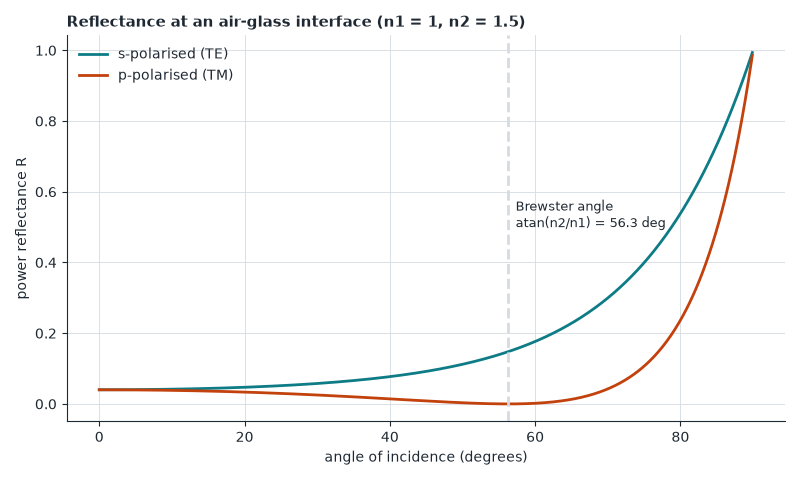
From Maxwell's equations to waves, reflection and the skin effect - the physics under every antenna, waveguide and chip wire. A first-principles learning page.
Notes (.md) · Full page
From Maxwell's equations to waves, reflection and the skin effect - the physics under every antenna, waveguide and chip wire. A first-principles learning page.
Notes (.md) · Full page
Silicon photonics waveguides
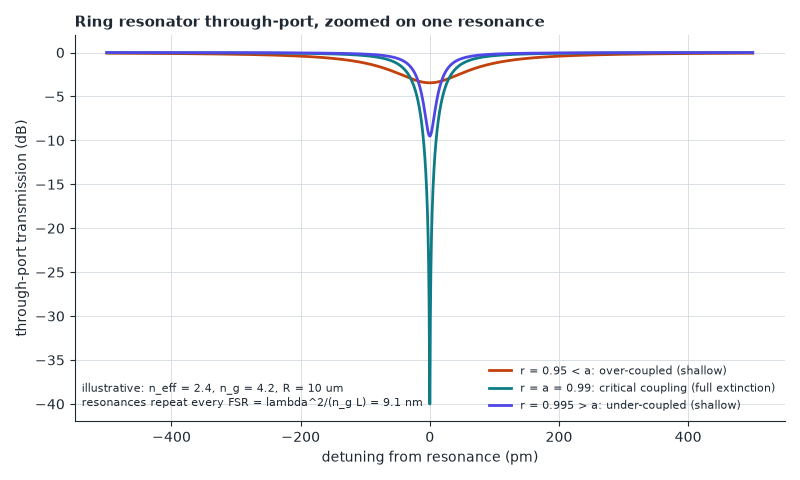
How light is guided on a chip - slab and wire waveguides, ring resonators and optical interconnects. A first-principles learning page.
Notes (.md) · Full page
How light is guided on a chip - slab and wire waveguides, ring resonators and optical interconnects. A first-principles learning page.
Notes (.md) · Full page
Lasers and photodetectors
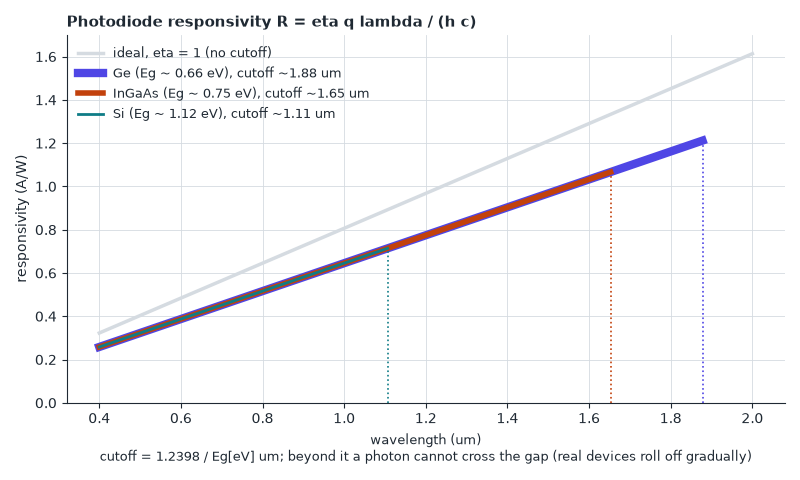
How semiconductors make light and detect it - LEDs, laser diodes, photodiodes and solar cells. A first-principles learning page.
Notes (.md) · Full page
How semiconductors make light and detect it - LEDs, laser diodes, photodiodes and solar cells. A first-principles learning page.
Notes (.md) · Full page
Chips and devices
IC fabrication flow
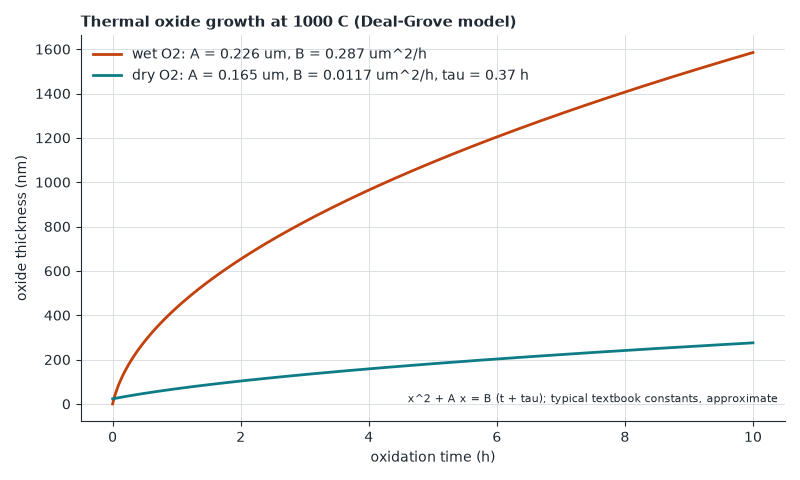
How a chip is made, from a bare silicon wafer to a packaged die - oxidation, lithography, etching, doping, deposition, polishing and yield. A first-principles learning page.
Notes (.md) · Full page
How a chip is made, from a bare silicon wafer to a packaged die - oxidation, lithography, etching, doping, deposition, polishing and yield. A first-principles learning page.
Notes (.md) · Full page
Lithography and EUV limits
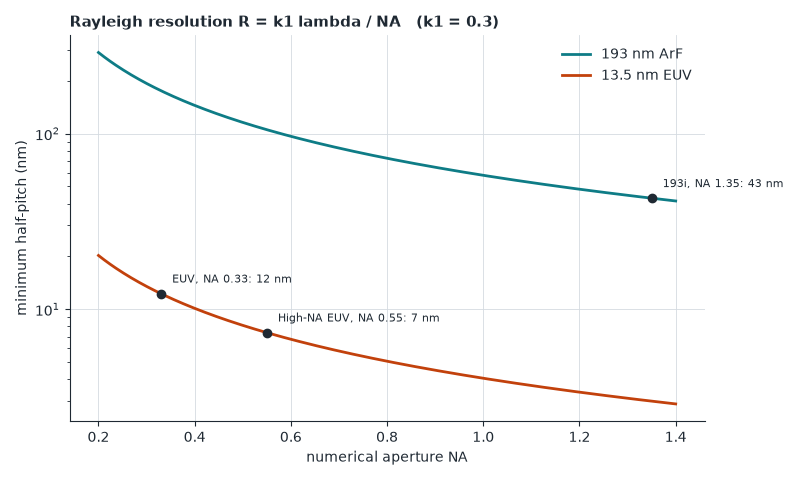
Why printing smaller chips needs shorter light and bigger lenses - Rayleigh resolution, depth of focus, EUV and photon shot noise. A first-principles learning page.
Notes (.md) · Full page
Why printing smaller chips needs shorter light and bigger lenses - Rayleigh resolution, depth of focus, EUV and photon shot noise. A first-principles learning page.
Notes (.md) · Full page
MOSFET and CMOS scaling
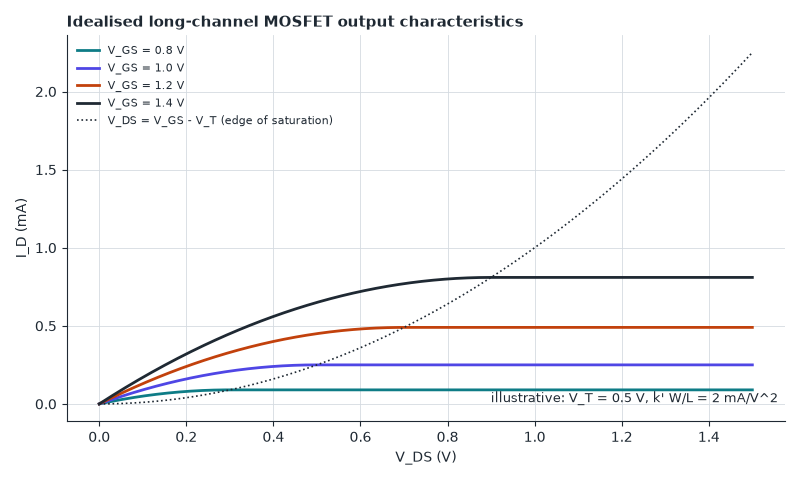
How the transistor works and why shrinking it helped, then stopped helping - square-law operation, subthreshold leakage and Dennard scaling. A first-principles learning page.
Notes (.md) · Full page
How the transistor works and why shrinking it helped, then stopped helping - square-law operation, subthreshold leakage and Dennard scaling. A first-principles learning page.
Notes (.md) · Full page
VLSI circuit design
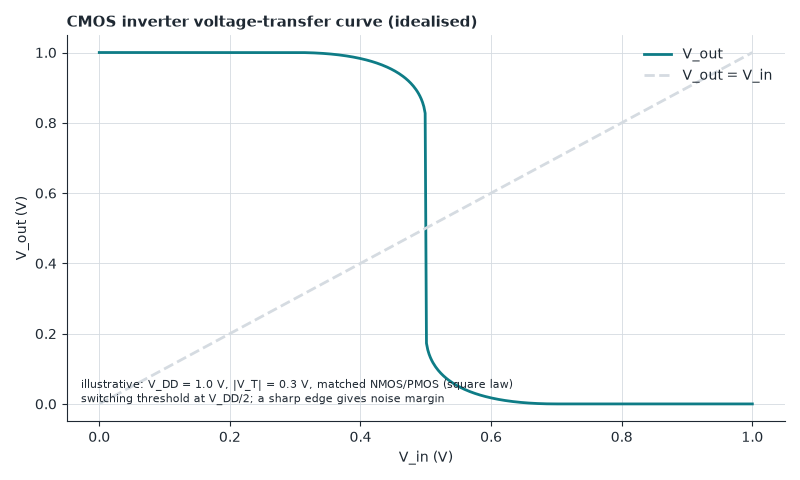
From a single CMOS inverter to a chip - logic levels, noise margin, dynamic power, the energy-delay trade-off and the digital design flow. A first-principles learning page.
Notes (.md) · Full page
From a single CMOS inverter to a chip - logic levels, noise margin, dynamic power, the energy-delay trade-off and the digital design flow. A first-principles learning page.
Notes (.md) · Full page
Power, RF and sensing
Power electronics converters
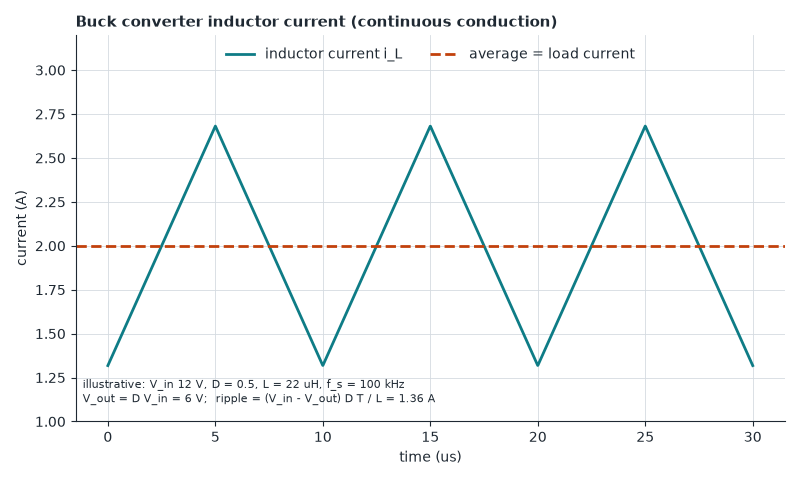
How switching converters change voltage efficiently - buck, boost and buck-boost, inductor ripple, losses and wide-bandgap devices. A first-principles learning page.
Notes (.md) · Full page
How switching converters change voltage efficiently - buck, boost and buck-boost, inductor ripple, losses and wide-bandgap devices. A first-principles learning page.
Notes (.md) · Full page
RF, antennas and microwaves
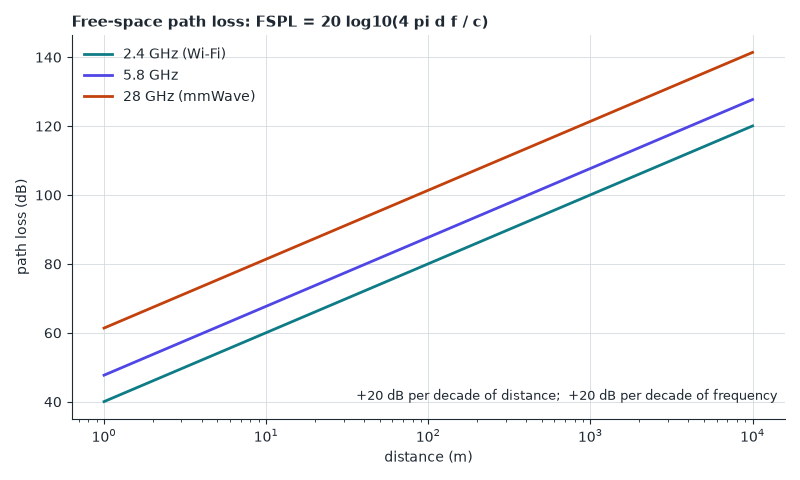
Transmission lines, reflection and matching, antennas and the Friis link budget - how radio signals travel and how circuits hand them over. A first-principles learning page.
Notes (.md) · Full page
Transmission lines, reflection and matching, antennas and the Friis link budget - how radio signals travel and how circuits hand them over. A first-principles learning page.
Notes (.md) · Full page
Sensors, MEMS and control
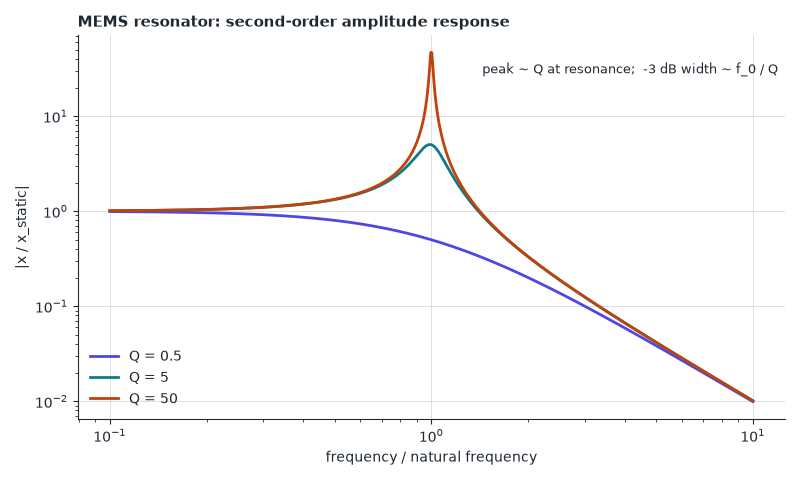
How tiny mechanical sensors work and how feedback makes systems behave - MEMS resonators, capacitive sensing and PID control. A first-principles learning page.
Notes (.md) · Full page
How tiny mechanical sensors work and how feedback makes systems behave - MEMS resonators, capacitive sensing and PID control. A first-principles learning page.
Notes (.md) · Full page
Learning pages with standard textbook formulas and illustrative component values. Not for design sign-off.