- education
- visualization
How the Periodic Table Was Made
A short course that rebuilds the periodic table from Lavoisier's 33 simple substances to Moseley's atomic number, with session notes to download
datasheet // periodic-table-course
- images
- 0
- videos
- 0
- formats
- none (text only)
- text
- 253 words · 2 min read
- studio
- /studio (gallery)
On this page0%
A course for a student who wants to understand the periodic table instead of memorizing it. Each session takes one step in the history, derives it, runs the numbers in code and ends with exercises. The interactive companion is the Periodic Table Builder.
Sessions so far
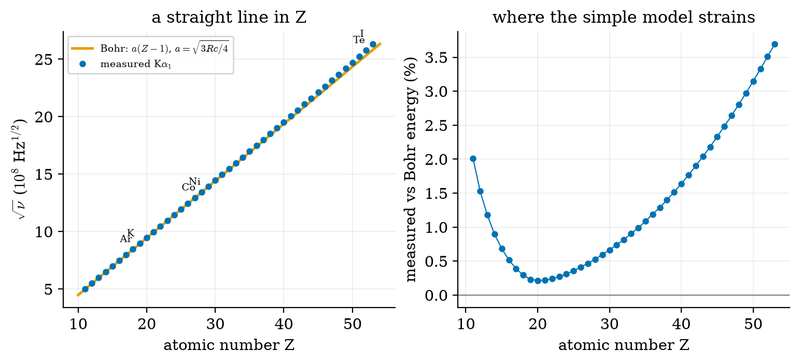
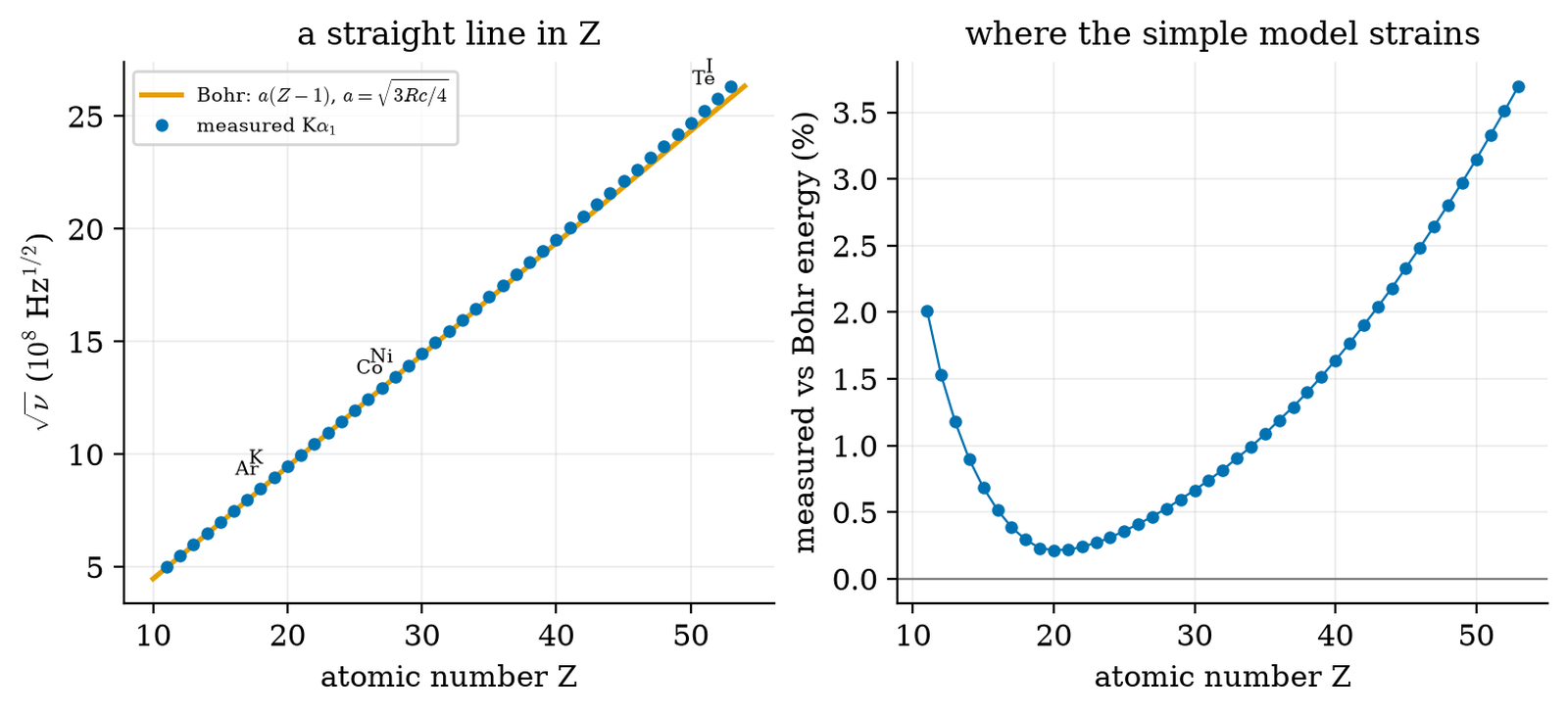
- Moseley’s law and the atomic number (1913). Why the square root of the X-ray frequency is a straight line in the atomic number Z, how it fixed the order of argon and potassium, cobalt and nickel, tellurium and iodine, and where the small deviations come from. Download the notes (.docx).
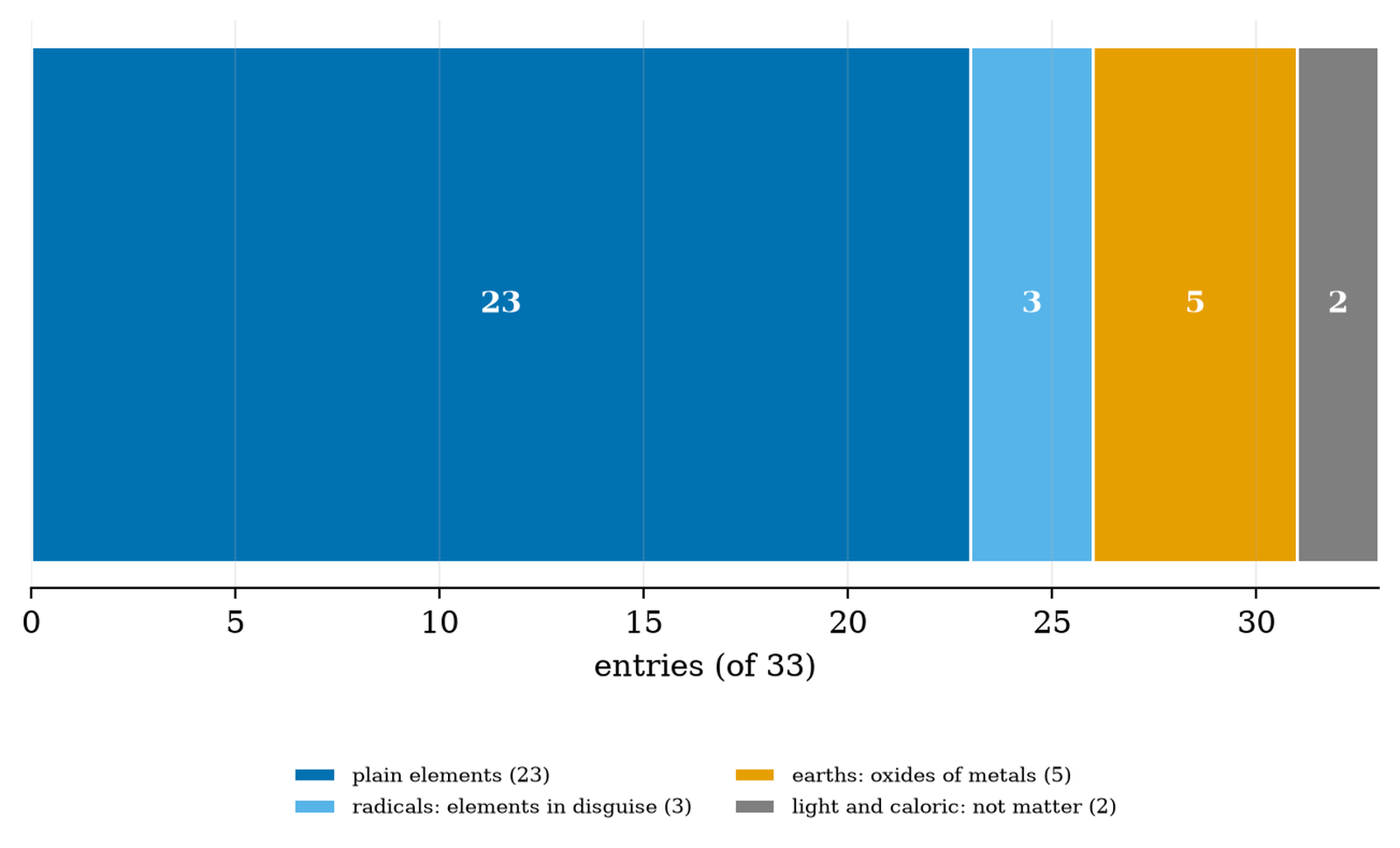
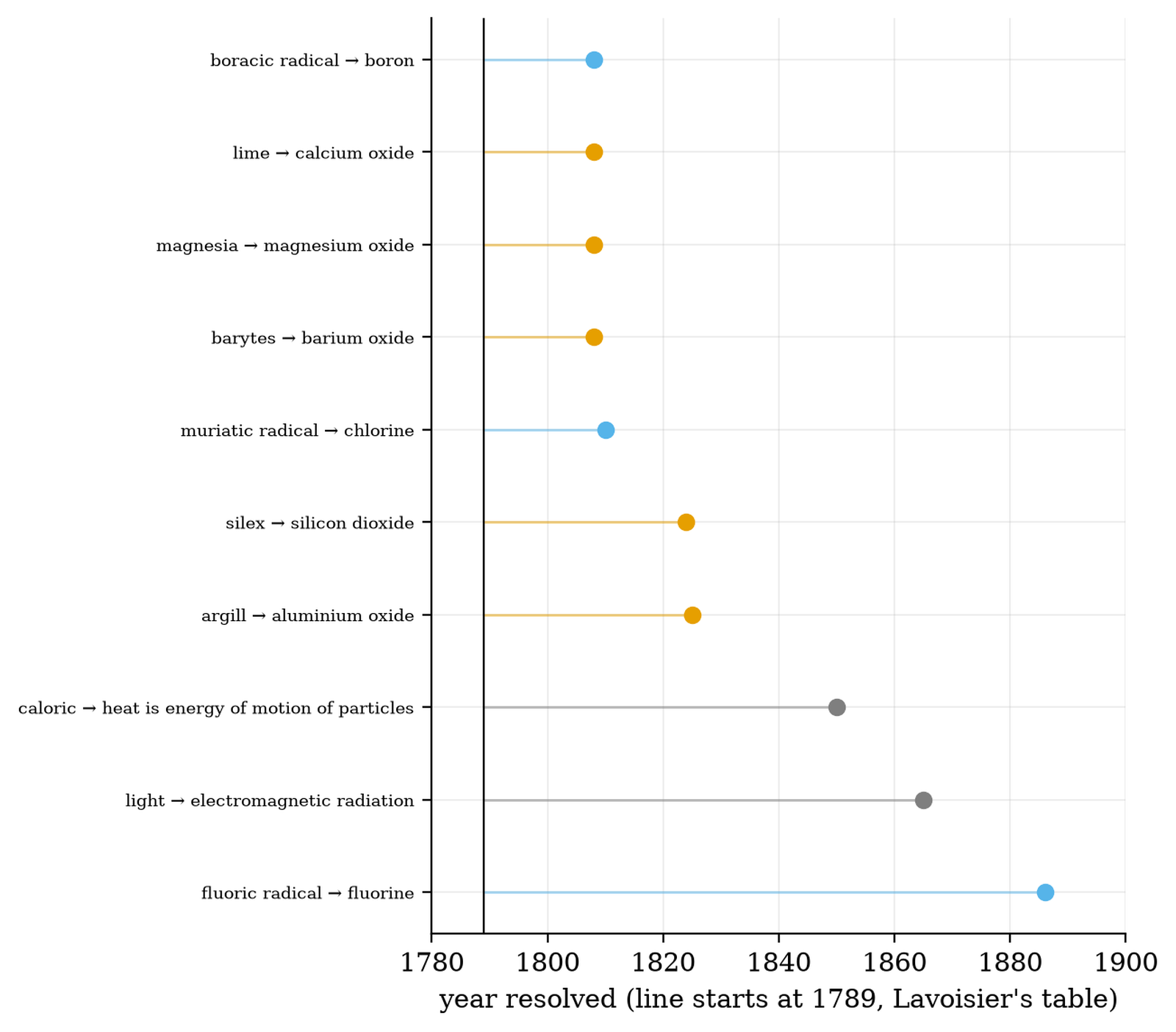
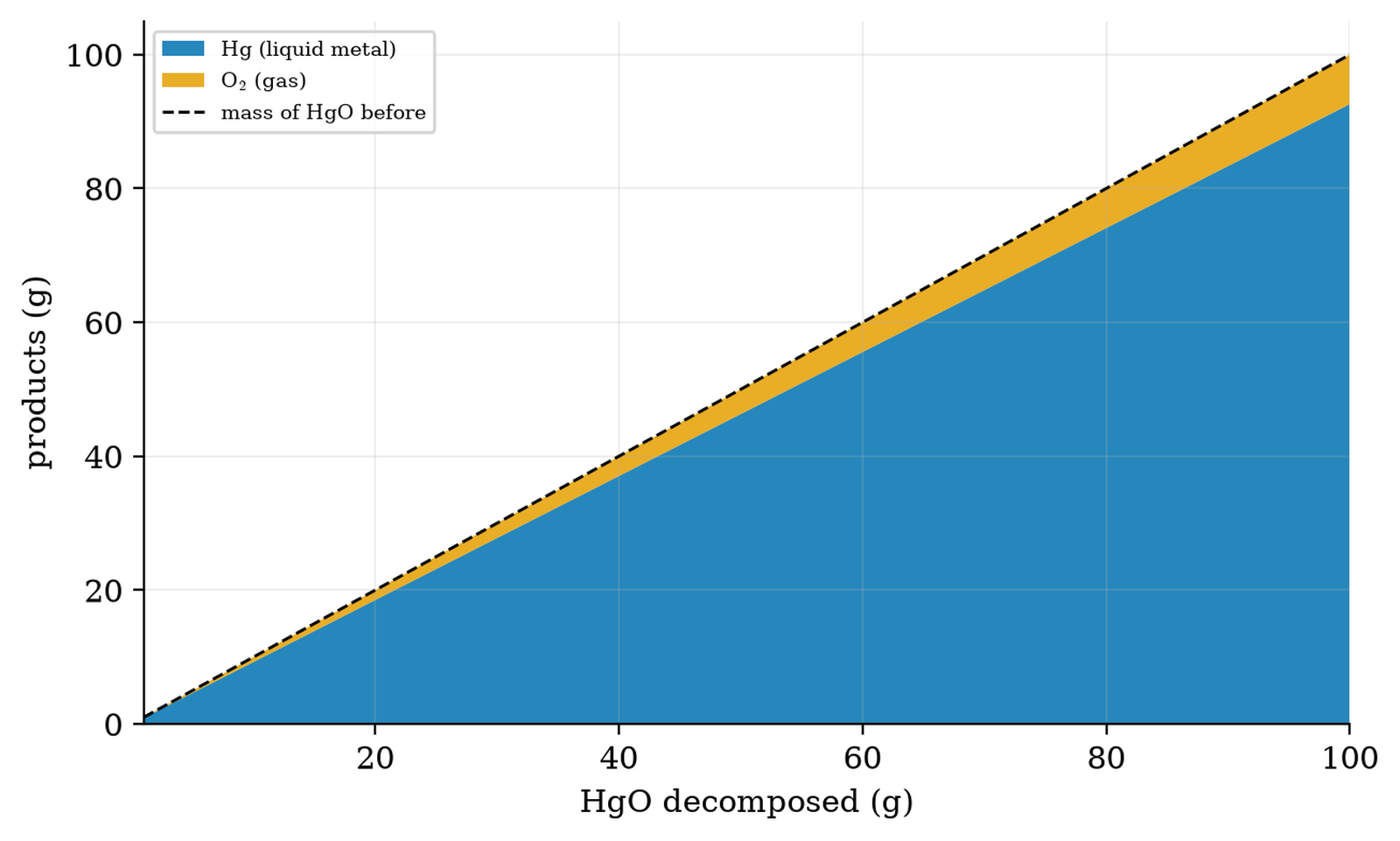
- What counts as an element: Lavoisier (1789). An element as a substance not yet decomposed, conservation of mass in a closed vessel, and what became of the 33 substances on Lavoisier’s list: 23 elements, 3 radicals, 5 earths and 2 imponderables. Download the notes (.docx).
Next in the course: atomic weights from Dalton to Cannizzaro (1860), then Newlands and Mendeleev, then electron shells.
The course has its own site and repository: openperiodictable (source), with the notes, the figure scripts and the tested Python modules.
Figures
Checks and limits
- The 118-element table in the app uses abridged standard atomic weights typed from general knowledge; check them against an IUPAC table before relying on them.
- Dates and the exact membership of Lavoisier’s list are taken from secondary sources and are flagged in the session notes where they need confirming against a facsimile of the Traité.
- The notes are written at college level (L3) and include worked problems with answers.